Comparación de tallas de copa | Leonisa

Comparación de tallas de copa: talla de copa A vs. B vs. C vs. D

Hay algunas categorías específicas que me gusta tener en cuenta al elegir un brasier. Ya sea para una compradora de Leonisa o para mí, siempre me enfoco en los elementos de calidad que conforman un brasier excelente y permiten que funcione y horme bien. Observo cosas como el material de la copa y la banda, las cargaderas (si las hay), el estilo general del brasier, el nivel de relleno, el soporte y el tamaño de la copa.

Recibo preguntas sobre el tamaño de la copa todo el tiempo, consultas que van desde estilos de brasieres específicos y tipos de copas de brasieres hasta determinar un tamaño de copa general que sea confiable independientemente del estilo del brasier, el material o el ancho de la banda. Mi respuesta a todas estas preguntas es: ¡Tu talla de copa está sujeta a cambios junto con diferentes factores de brasier y tiene que ver principalmente con las medidas! Si tienes preguntas similares, no estás sola. Estoy aquí para ayudarte a encontrar el tamaño de copa y el tamaño de banda asociado que funcione mejor para ti. Para ayudar a explicar esto en detalle, he creado una guía de comparación para las tallas de copa A-DD que también incluye consejos útiles para encontrar la mejor talla o tallas de brasier en general. Comencemos, ¿de acuerdo?

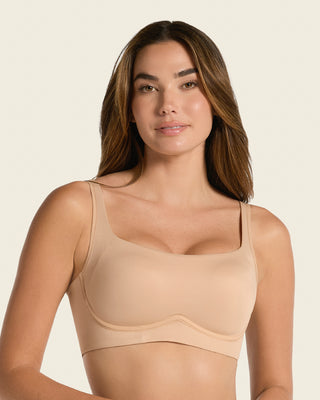
 Brasier moldeador con arcos


Brasier moldeador con arcos

Talla de copa vs talla de banda

Lo primero que debes saber es que tu talla de copa y tu talla de banda son dos tallas diferentes. El tamaño de tu copa se refiere solo al tamaño de la copa en sí y no a todo el brasier o cualquier otra parte del mismo. A medida que aumenta el tamaño de la copa y se mueve en orden alfabético desde la letra A en adelante, las copas del brasier se vuelven más profundas y anchas. El tamaño de la copa se mide por la medida del busto (incluidos los senos) menos la medida de la caja torácica tomada justo debajo de los senos. Por ejemplo, una mujer con senos más pequeños puede encajar mejor en un tamaño de copa A o B, mientras que aquellas con senos más grandes pueden llenar una copa C o D.

Cuando se trata de encontrar un brasier, la talla de copa no es algo que debas tomar como una sugerencia general. El tamaño de tu copa es algo que vale la pena determinar en forma específica porque una coincidencia precisa del tamaño de la copa ayuda a que tus brasieres te queden mejor. Durante tu tiempo como usuaria de brasieres, es probable que hayas experimentado algunos efectos molestos al usar ciertos brasieres tradicionales. Estos problemas comunes con los brasieres pueden incluir marcas rojas en la piel, bultos, falta de ajuste y más. ¡La mayoría de las veces, estos problemas se pueden resolver cambiando el tamaño de la copa! Al cambiar el tamaño de la copa, creará un mejor ajuste alrededor de tu seno y evitará más problemas.

Además de la talla de copa, la talla general de brasier también incluye la talla de banda. La banda es la parte del brasier debajo de las copas y las cargaderas que envuelve el pecho y la espalda. Dependiendo del estilo de brasier que prefieras, la banda puede cerrarse en la parte posterior con dos o tres ganchos, engancharse en la parte delantera entre las copas o tener un diseño sin broche que se coloca sobre la cabeza. Independientemente del tipo de banda, el tamaño específico de tu banda es el mismo que el número de pulgadas en la medida de tu pecho, medido justo debajo de tus senos en el área de la caja torácica.

Varios bras


Un tamaño de banda preciso es importante porque la banda es responsable del soporte general del brasier. La banda debe quedar bien ajustada, sintiéndose ajustada pero no demasiado apretada, para crear una buena base y forma para el brasier cuando se combina con las copas y las cargaderas. Si alguna vez sentiste que tu brasier no se ajusta bien o que tus senos se movían demasiado mientras lo usabas, es posible que hayas estado usando una talla de banda que era demasiado grande. Por otro lado, las bandas que son demasiado pequeñas también presentan una buena cantidad de problemas. Si notas dolor en la caja torácica, dificultad para respirar o que sus cargaderas se caen mucho, considera reevaluar el tamaño de tu banda para eliminar estos problemas y obtener un mejor ajuste.


Guía de comparación de tallas de copa

Ahora que estás familiarizada con los detalles del tamaño de copa, es hora de hacer una pequeña comparación entre diferentes tamaños de copa. Esto es útil si ya conoces tu talla de copa o si todavía estás en el proceso de determinar la tuya. Cada sección presenta una descripción detallada del tamaño de la copa y cómo se relaciona con el tamaño general del brasier. También he incluido algunas notas sobre cada talla de copa, incluidos consejos de compra, sugerencias de materiales y los mejores estilos de brasier para cada talla de copa.

Guía de comparación de tallas de copa


Comparación de tamaños de copa: Copa A vs. Copa B

Los tamaños de copa A y B constituyen el extremo más pequeño del espectro de tamaños de copa. Sin embargo, el hecho de que estos tamaños de copa sean más pequeños no significa que no requieran un brasier de apoyo. Es importante usar un brasier incluso si tiene una copa A o B porque te brinda el apoyo que necesitas. Si tus senos se encuentran en una de estas categorías de tamaño de copa, también es importante que uses un brasier deportivo cuando hagas ejercicio o participes en una actividad de alto impacto. Esto te mantendrá cómoda y ayudará a prevenir cualquier desgarro muscular en el área del pecho.

Brasier corrector de postura Copas de contorno Multi/Beneficio


Brasier corrector de postura Copas de contorno Multi/Beneficio

¿Crees que tu talla de copa es A o B? ¡Coge tu cinta métrica y descúbrelo! Mide todo el contorno de la caja torácica, incluidos los senos, luego mide la banda, que mide todo el contorno de la caja torácica justo debajo de los senos, es exactamente igual o cercana a una pulgada, entonces tu talla de copa normal está en la categoría A. Esa medida, la llamaremos medida del tamaño de la copa, si estás más cerca de dos pulgadas, entonces estás en la categoría de copa B. Ambas copas funcionan bien con casi cualquier estilo de brasier, pero tengo algunas notas sobre cada una para ayudarte con las compras y el estilo.

El mejor brasier para copas A: si tus senos son del lado más pequeño, las copas A te quedan mejor, ¡entonces puedes lucir casi cualquier estilo de brasier! Incluso hay brasieres pequeños especiales disponibles para aquellas con un marco general pequeño. Los brasieres pequeños están diseñados para usarse con ropa normal, lo que hace que un brasier pequeño sea el compañero perfecto para todos tus atuendos.  

 Brasier push-up 2 tallas más


Brasier push-up 2 tallas más

El mejor brasier para copas B: si la talla de copa A no es suficiente y comienzas a ver derrames, abultamientos o ambos, date un poco más de espacio en las copas y prueba una copa B. La diferencia entre un tamaño de copa y el siguiente no es mucho, pero a veces cambiar de copas A a copas B hace una gran diferencia. Las copas B se pueden mejorar fácilmente, pero también se ven geniales sin mucho realce. ¡Aprovecha este talle si lo tienes y luce un bralette lindo y coqueto! Este estilo de brasier elegante pero cómodo está hecho para lucirse y brinda la cantidad justa de soporte para las copas B.


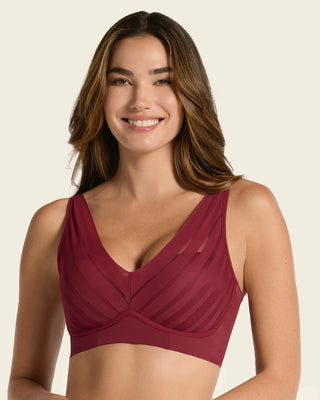
Bralette con detalle de encaje y escote en V profundo


Bralette con detalle de encaje y escote en V profundo

Comparación de tamaños de copa: Copa B vs. Copa C

A medida que mi lista de comparaciones de tamaños de copa comienza a crecer, considera la copa C como una especie de punto intermedio. Si tus senos se ajustan mejor dentro de un brasier con copa C, tienes tantas opciones excelentes cuando se trata de brasieres y lo que pueden hacer por ti.


Brasier Minimizador Suavizante - Sujeción Perfecta


Brasier Minimizador Suavizante - Sujeción Perfecta

Las copas B ofrecen suficiente para lucir y realzar, pero también funcionan para correr y otros entrenamientos de alto impacto. Si estás buscando llevar tus copas B al siguiente nivel, no busques más allá de un brasier push up alto, que te llevará de B a C, y tal vez un poco más lejos. Las copas talla C pueden lucir mejor con un brasier suave hecho de tela de camiseta o un brasier sin arcos, aunque un brasier tradicional con arcos es una opción sólida para un soporte óptimo y poder moldeador.

El mejor brasier para copas C: un excelente brasier para todos los días con un amplio soporte, tus copas C merecen lucirse en diferentes estilos de brasieres sexys! Los estilos divertidos y sexys de brasieres pueden variar en la forma de la copa y otros elementos, pero las copas C de tamaño mediano completarán cualquier estilo a la perfección. Opta por estilos de brasier sexy con cortes de malla, telas elegantes, combinaciones de colores sensuales y más.


Comparación de tamaños de copa: copas C vs. D y DD

La graduación de copas C a D puede ser sorprendente a veces. Descubrí que hay un poco de área gris entre las copas C y las copas D, y eso se debe principalmente a que los dos tamaños de copa generalmente incluyen aquellos con tamaños de banda similares. La diferencia entre las copas D y DD puede volverse aún más confusa. Si recuerdas, hablamos sobre el tamaño de la banda anteriormente y cómo personalizar el ajuste y el nivel de soporte de tu brasier además del tamaño de la copa. El tamaño de la banda también puede darte un poco de margen de maniobra en cuanto al tamaño de la copa, y veo que la mayor parte de eso sucede entre las copas C, D y DD. Esto también se conoce como la talla hermana de tu brasier y, a menudo, resulta útil si tu talla normal de brasier no está disponible o si quieres probar diferentes combinaciones de tallas de copa y banda para un ajuste más personalizado.

Si las copas C son el punto medio o el indicador de tamaño de senos mediano en la escala de tamaño de copa, entonces las copas D marcan la transición hacia senos más grandes y las copas DD son exactamente lo opuesto a las copas A. Las copas C son bastante versátiles y, al igual que las copas B, tienden a encajar muy bien en una selección diversa de estilos de brasieres sin dejar de tener una forma natural y proporcional al cuerpo. Por otro lado, para mis mujeres copas D grandes o copas DD, están bendecidas con el tamaño que los brasieres push-up fueron diseñados para ti. Cuídalos, apóyalos y, lo más importante, ¡presúmelos!


El mejor brasier para copas D: mi regla es que las copas más grandes deben tener más soporte. Para copas D, recomiendo un brasier con arcos de apoyo para mantener esas copas D ligeramente levantadas y seguras durante todo el día. Afortunadamente, Leonisa tiene los brasieres con arcos más cómodos del planeta en una impresionante variedad de estilos.


Brasier con arcos que suaviza la espalda


Brasier con arcos que suaviza la espalda

Los mejores brasieres para copas DD: ¡Los brasieres con arcos también son una excelente opción para todos los días para las copas DD! Además de tener algunos estilos con arcos, me gusta recomendar un brasier reductor para esos momentos en los que necesita un poco de apoyo adicional. Estos brasieres ofrecen un efecto suavizante alrededor de las copas, debajo de los brazos y en el área de la espalda para una apariencia elegante y sin costuras debajo de la ropa.

Encontrar tu talla de brasier perfecta

Prefiero comprar todos mis brasieres en línea y probármelos en mi propia casa, por eso sé que es importante estar informado sobre la diferencia en los tamaños de copa. Si todavía no estás segura de tu talla real de brasier, no te preocupes. Responde al cuestionario de tallas de brasieres de Leonisa, un buscador de tallas de brasieres paso a paso, y sabrás qué talla o tallas pedir para que pases menos tiempo haciendo devoluciones y más tiempo disfrutando de tu brasier perfecto.


Image Credits

vectopicta/Shutterstock.com

Compare Cup Sizes
A, B, C, D & DD Cup Sizes

There are a few specific qualities I look for when choosing a bra. Whether it's for a Leonisa shopper or for myself, my focus is always on the quality elements that make up a great bra, those details that guarantee a perfect fit and high performance. I look at factors like the material the cups and band are made of, straps (if there are any), overall bra style, level of padding, support, and cup size. When helping a client find her best bra, I shop within her style criteria and list of desired results using these criteria with special focus on the correct cup size.

I get questions about bras and cup sizes all the time, with questions ranging from specific styles and different types of cups to helping clients find a size that will fit regardless of bra style, material or band width. My answer to all these questions can be summed up like this: Your cup size is unique and it’s determined by your unique measurements, but different bra styles can fit differently, too. 

If you find bra sizing confusing, know that you're not alone. I'm here to help you find the right cup size and band size that work best for you. To help explain this in detail, I’ve created this cup size comparison guide for sizes A-DD that also includes helpful tips for finding your overall best bra size and discovering your sister sizes. Let's get started, shall we?

It’ll only take 4 minutes.

Finding the Right Cup Size

When it comes to finding a bra, cup size isn’t something one merely estimates. It’s worth it to find your exact cup size according to the size chart of the brand you’re shopping, because an accurate cup size match helps your bras fit better. You’ve probably experienced a few annoying effects of wearing ill-fitting bras. These common bra issues might include red marks on your skin, spillage, skin bulges, gapping, wrinkles and more. What if I told you that all these problems can be solved by a change in your cup size? Simply changing this one factor can help you choose bras that offer a better fit, which can help you avoid the other problems I mentioned above.

What is a cup size?

Your cup size refers to the size of the cup, not any other part of the bra. Cup sizes start at A (or sometimes an AA or AAA), and move up alphabetically to B, C, D, and beyond. As the letter increases, the cups become deeper and wider. For example, someone with smaller breasts might fit best in A cups or B cups, while those with larger breasts might fill out C cups or D cups. 

How is cup size measured?

To calculate your cup size, take your bust measurement (including the fullest part of the breasts) and subtract your rib cage measurement (underbust). Each letter corresponds with the number of inches from your measurement. 

  • 1 inch = A cup size
  • 2 inches = B cup size
  • 3 inches = C cup size
  • 4 inches = D cup size
  • 5 inches = DD cup size

Compare Cup Sizes: A vs. B Cup

Both A and B cup sizes make up the smaller end of the spectrum. Unlike bigger sizes, which often need extra support to prevent back pain, A and B cups have more flexibility. While not medically necessary for daily wear, many people with A or B size breasts choose to wear bras for coverage and smoothness under the clothes, to create a specific silhouette, or simply to feel more comfortable or “dressed.” 

If your breasts fall into one of these smaller cup size categories, it's still important for you to wear a sports bra when working out or engaging in high-impact activity like running or jumping. Even A-cup boobs bounce during an intense exercise. Wearing a sports bra will keep you comfortable and help prevent long-term stretching of the ligaments in the chest area.

What does an A cup look like?

Do you think your cup size is an A or B? Grab your measuring tape to find out! If your bust measurement, which measures all the way around your rib cage including your breasts, minus your band measurement, which measures all the way around your rib cage just under your breasts, equals exactly or close to one inch, then your regular cup size is in the A category. If that measurement - called the cup size measurement - is closer to two inches, then you're in the B cup category.

What does a B cup look like?  

It actually depends on the size of your band. The volume of the cup changes with the width of the chest. The wider the chest, the more breast tissue will have to spread across, appearing more flat or shallow. As a result, 32B, 34B, 36B are all different cup volumes, and you cannot just simply change the band size and keep the same cup size letter. See below how to calculate your correct bra sister size (it’s very helpful to know when you need to try a different band size to get the same cup volume!)

Best Bras for B Cups: B cups work well with just about any bra style – push up, wireless, strapless, demi, or full coverage. Leonisa sells a great variety of comfortable and sexy bras suitable for B cup breasts. 

Comparing Cup Sizes: B vs. C Cup

As the list of cup size comparisons goes from A to DD or even beyond, consider the C cup to be the midway point of the scale. If your breasts fit best inside a bra with C cups, you have so many great options when it comes to bras and what they can do for you. Of course, this is not to say that their little sister, the B cup, doesn't have anything to offer. Let's compare.

A pair of B cup boobs is enough to show off and enhance, but they're also easily secured for a workout. If you're looking to take your B cups to the next level, look no further than a high push-up bra, which will visually take you from B to C - and maybe a little further - in no time. 

For those of you who comfortably fill C cups without push-up power or other bra enhancements, know that there is no shortage of ways for you to wear a bra, either. Your size C cups might look best in a soft bra made of t-shirt fabric or a wireless bra, though a traditional underwire bra is a solid option for optimum support and shaping power.

Best Bra for C Cups: If you wear a C cup, we have great news! A C cup breast fills out nearly any bra style beautifully. Go for sexy bra styles with mesh cutouts, sleek fabrics, sultry color combinations and more.

Compare Cup Sizes: C vs. D and DD Cups

The difference between C and D cups can be surprising. I've found there is a bit of gray area between C cups and D cups, and that's mostly because the two cup sizes generally include those with similar band sizes. The distinction between D and DD cups can get even foggier (see bra sister sizes below for more information). 

If C cups are the midpoint or medium breast size indicator on the cup size scale, then D cups mark the transition towards larger and fuller breasts and DD cups fall at the opposite end of the scale from A cups. You see, C cups are quite versatile and, like B cups, tend to fit nicely into a diverse selection of bra styles while still looking natural in shape and proportional to the body. On the other hand, to my ladies with lovely, large D cups or DD cups, you're blessed with the size that push-up bras were designed to emulate. Take care of them, support them and, if you choose, flaunt them!

Best Bra for D Cups: Larger cup sizes should be met with more support. For those with D cups, I recommend a supportive underwire bra to keep D cup size breasts lightly lifted and secure all day. Thankfully, Leonisa has extremely comfortable underwire bras in an impressive range of styles.

Best Bras for DD Cups: Underwire bras are a great everyday option for DD cups, too! In addition to having a few underwire styles in your bra rotation, I would like to recommend a minimizer bra for those times when you need a little extra support. These bras offer a smoothing effect around the cups, under the arms and in the back area for a seamless and sleek look underneath your clothing.

Bra Sister Sizes

If you remember, we talked about band size earlier and how, combined with the cup size, it customizes the fit and support level of your bra. The band size can also give you a bit of wiggle room in terms of cup size, and I see most of that happening between C, D, and DD cups. This “wiggle room” is also known as your bra sister size. Knowing your sister sizes comes in handy if your regular bra size isn't in stock or you want to try different cup and band size combinations for an even better fit.

To find your bra sister size, you just need to take your current size – let’s say it’s 36C – and choose either the band 34 for a tighter fit around the rib cage, or the band 38 for a more relaxed fit. Then, adjust the cup size to be one size bigger for a smaller band (34D) or one size smaller for a larger band (38B). It’s easy to remember: when you increase the band size, decrease the cup size, and when you decrease the band size, you need to increase the cup size. 

Why do bra sister sizes work? Because the cup volume is an equation including both the cup size and the band size. A 34D bra will have cups with the same volume as a 32DD or a 36C bra. Cool, right?

Bra Cup Styles

When choosing a bra, you will also want to take the cup style into consideration. Different cup styles offer a different level of coverage.

  • Full cup bras (also called full coverage) provide the most coverage for ultimate support and comfort. They’re recommended for full busts because they support the weight of the breast. Many include underwire for even more support. They tend to have wider straps for support, but most of the support should come from the band of the bra. Full cup bras are an everyday go-to for C cup size, D cups, DD cups, and beyond. They work great under T-shirts, blouses, and dresses.

  • Demi-cup bras (also called half-cup bras) cover the lower half of the bust. They have a triangular shape and just enough plunge to make them perfect for low-cut tops. Some of them have convertible straps that can be worn classic or crisscross in the back, letting you pair them with multiple shirt styles.

  • Balconette bras offer a similar level of coverage to demi-cup bras, except the cups are rounded at the top and they can typically be worn strapless. Not only can they be worn with low-cut tops, but they can also be worn with sleeveless tops, or anything where you don’t want the straps to be sticking out.

  • Push-up bras center and lift the bust with built-in push-up padding, also available across cup sizes.

Explore all the bra styles we offer at leonisa.com. We have a bra style for every day, every outfit, and every mood. They highlight your curves, they’re comfortable and supportive, and many of them even disappear under clothes! Just make a wish and find a bra with the features of your dreams.

Find your new favorite bra

Get 15% OFF!

Coupon: 15DISCOUNT

Cup Size FAQ

Still have questions about your bra cup size? Don’t worry, we’ve got you covered.

The cup size is the letter portion of your overall bra size. For example, in 34B, the B is the cup size. Cup sizes include A cup, B cup, C cup, D cup, DD cup, and beyond!

Using a measuring tape, measure just under your bust for the band size, then measure around the fullest part of your bust. The difference in inches between the two determines your cup size. We offer guidance with pictures and video for you to find your bra size.

The letter reflects the difference in inches between your underbust and bust measurements. A cup boobs represent one inch difference between the underbust and bust sizes, B cups have a 2-inch difference, a C cup size represents a 3-inch difference, and so on.

You’ll know your bra’s cups are too tight if it creates a “quad boob” effect, with extra breast tissue spilling out from the top of the cups. It may look weird, but what’s even more important is that it will feel uncomfortable. Try going up a cup size but staying at the same band size - for example, if you’re spilling out of a 34B, try a 34C for a better fit and more comfortable feel.

A cup that’s too small will dig in and your boobs will spill out from the top. If the cups are too big, you’ll notice wrinkles or gapping. The perfect cup size is one that fits smoothly and supports comfortably. A cup breasts will be subject to gapping in a B cup bra, but D cup breasts will spill out of an A cup bra. Finding your cup size will help you find a bra that provides the support - and, most importantly, the comfort - that you’re looking for!

You can try both of the sizes you’re in between and see which one fits better. You may also want to opt for non-molded cups, like fabric cups, for a more flexible fit. Or you can consult with one of our Personal Shoppers!

It’s not unusual for bra cup sizes - or band sizes, for that matter - to change over time. If you’ve experienced pregnancy, weight loss, weight gain, hormonal shifts, or if you just feel like your bra isn’t fitting right, it’s good to re-measure yourself. We also recommend checking your bra size at least once a year just in case.

Yes! We have a full, easy-to-use size guide to help you find your ideal fit. Plus, our Personal Shoppers and our Customer Service team are eager to help you.

Our largest cup size is a DD cup, which is available in multiple styles that offer excellent support.

Our bras start at a B cup, but AA cup is typically recognized as the smallest size. Some specialty brands even offer AAA cups!

Our Personal Shoppers

Leonisa Style Confidants are a team of personal shoppers and intimate apparel experts who help women find the perfect fit for their bodies and lifestyles. With experience in fashion, styling, and body-positive guidance, Susana, Laura, Alejandra, and Camila offer personalized advice on bras, shapewear, and everyday essentials. Through consultations and expert tips, they empower women to feel confident, comfortable, and supported in what they wear.